
Lesson Dialogues
 MP3
MP3
Download Now
* Hover over or tap words to see definitions: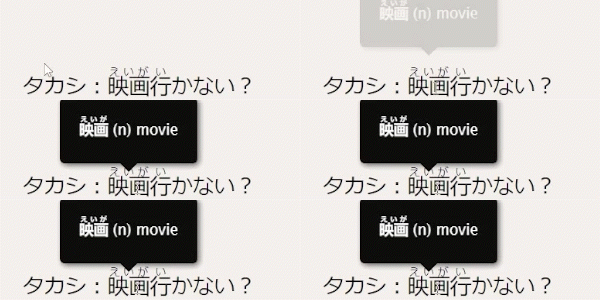
Situation 1
Takeshi got a phone call from his mother.
Comprehension Quiz (Skip if you don't understand the conversation yet)
タケシは、家に帰りますか?
A はい
B いいえ
母:今どこにいるの?
タケシ:友達の家。
母:もうご飯の時間だよ。帰ってきて。
タケシ:わかった。今日のご飯、何?
母:タケシの好きなカレー。
Situation 2
Rika and Naoki are talking after watching a movie.
Comprehension Quiz (Skip if you don't understand the conversation yet)
リカとナオキは、この後____。
A 映画を観る
B 友達の家に行く
C 家に帰る
D ランチを食べる
リカ:映画面白かったね。
ナオキ:うん。こんなに面白い映画初めて観た。
リカ:この後、何する?
ナオキ:ランチ食べない?
リカ:いいね。そうしよう。
Situation 3
Ohnishi-san is talking about a certain restaurant with his neighbor, Matsui-san.
Comprehension Quiz (Skip if you don't understand the conversation yet)
松井さんは、その新しいお店に行きましたか?
A はい
B いいえ
大西:新しいお店ができましたね。そこ。
松井:そうですね。
大西:もう行きました?
松井:はい。
大西:どうでした?
松井:結構美味しかったですよ。
Situation 4
Saito-san is starting a conversation with a junior colleague, Yamada-san in the office.
Comprehension Quiz (Skip if you don't understand the conversation yet)
山田さんは、____を辞める。
A 会社
B 大学
C 友達
D 学校
斉藤:会社辞めるってほんと?
山田:はい。
斉藤:辞めてから、どうするの?
山田:大学に行くんです。
斉藤:へー、そうなんだ。すごいね。
Step 2 - Take the Quiz
Let's see how many words you remember.
Take the quiz here.
Step 3 - Writing Exercises (Optional)
Let's practice what you learned here.
Why is it “辞めてから、どうするの?” but not “辞めるから、どうするの?”? Just trying to figure out why the te form is used.
辞めてから consists of 辞めた and から.
辞めた means “have quit” (present perfect)
A literal translation of the sentence would be:
What are you going to do once you have quit?
辞める means “I’m going to quit” or “I will quit”. (plan or intention)
You can say 辞めるから, but it has a different meaning.
It works as “because I’m going to quit.” or “because I’m leaving a company.”
Example:
明日で会社を辞めるから、残りの仕事はやってくださいね。
I’m leaving the company tomorrow, so please take care of the rest of the work.