I wanted to ask why で in the sentence 家族でイギリスに行く予定です。is correct.
The translation of this sentence is “I plan to go to England with my family.”
Therefore I thought the japanese sentence would be 家族とイギリスに予定です。because と can be translated as “with”.
When you say 家族で, it means “my whole family,” or “the whole family.” And it includes yourself.
On the other hand, 家族と means “with my family.” So, you are right. If it means “I plan to go to England with my family,” 家族と is more accurate.
I’m not sure how we are supposed to translate when we want to say 家族で, though.
Does “My whole family plans to go to England” make sense? Does it include yourself?
Ah, I see why this is kinda difficult to translate. Hmm. I’d say “the whole family” does include yourself. You can try out translating it that way next time.
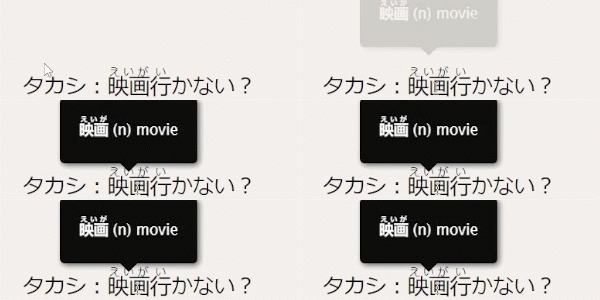
Or including 家族で as “the whole family” in the little definition pop up for 家族.
「家族で」and「家族に」can describe the same situation (the same people are going on a trip), but if you say 家族で, it has more togetherness, as in “we are going together”.
I don’t think “the whole family” has the same nuance because it implies all of your family members are going. “The whole family” is more like 家族全員で.
But I think we can say 家族で even if a couple of siblings are not coming. (If you have a lot of siblings–some of whom might not live together–this kind of situation is totally possible.)
Or at the very least, I don’t think 家族で includes more people (except for yourself) than 家族と

 MP3
I wanted to ask why で in the sentence 家族でイギリスに行く予定です。is correct.
The translation of this sentence is “I plan to go to England with my family.”
Therefore I thought the japanese sentence would be 家族とイギリスに予定です。because と can be translated as “with”.
When you say 家族で, it means “my whole family,” or “the whole family.” And it includes yourself.
On the other hand, 家族と means “with my family.” So, you are right. If it means “I plan to go to England with my family,” 家族と is more accurate.
I’m not sure how we are supposed to translate when we want to say 家族で, though.
Does “My whole family plans to go to England” make sense? Does it include yourself?
Oh, thank you! Now I understand it better!
Ah, I see why this is kinda difficult to translate. Hmm. I’d say “the whole family” does include yourself. You can try out translating it that way next time.
Or including 家族で as “the whole family” in the little definition pop up for 家族.
No problem! I’m glad to hear that.
Thank you for your suggestion. I’ll convey it to our staff member in charge of translation. 🙂
「家族で」and「家族に」can describe the same situation (the same people are going on a trip), but if you say 家族で, it has more togetherness, as in “we are going together”.
I don’t think “the whole family” has the same nuance because it implies all of your family members are going. “The whole family” is more like 家族全員で.
But I think we can say 家族で even if a couple of siblings are not coming. (If you have a lot of siblings–some of whom might not live together–this kind of situation is totally possible.)
Or at the very least, I don’t think 家族で includes more people (except for yourself) than 家族と