
Lesson Dialogues
 MP3
MP3
Download Now
* Hover over or tap words to see definitions: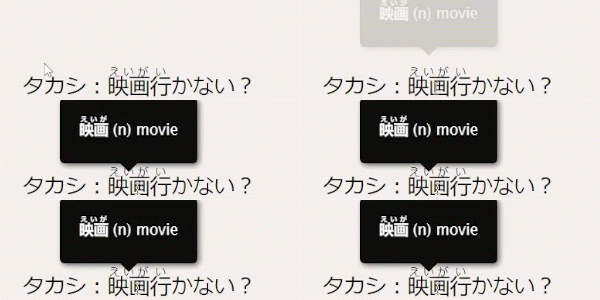
Situation 1
Ohnishi-san is talking with his neighbor Matsui-san.
Comprehension Quiz (Skip if you don't understand the conversation yet)
1. 松井さんは、そのカフェにもう行きましたか?
A はい
B いいえ
2. 大西さんは、____にそのカフェに行った。
A 木曜日
B 金曜日
C 土曜日
D 日曜日
大西:最近、すぐそこにカフェできたの知ってます?
松井:はい、知ってますよ。
大西:松井さん、もう行きました?
松井:まだです。行ってみたいなって思ってるんですけど。
大西:そうなんですか。
松井:コーヒーが美味しいらしいですね。大西さんは、行きました?
大西:はい。でも、行ってもなかなか入れなくて。
松井:いつ行ったんですか?
大西:昨日、行ってきました。人いっぱいでしたよ。
松井:昨日は日曜日ですしね。
大西:確かに、それでいっぱいだったのかもしれません。
松井:結構待ったんですか?
大西:かなり待ちました。入るまでに、1時間くらいかかりました。
松井:えー、1時間も待ったんですか?それは大変でしたね。
Situation 2
Ami and her father are talking while walking through town.
Comprehension Quiz (Skip if you don't understand the conversation yet)
1. その車は、____年くらい前の車だ。
A 10
B 50
C 100
D 200
2. 父は若い頃、昔の車を持っていましたか?
* 父 father
A はい
B いいえ
アミ:あんま見ない車だね、あれ。
父:ほんとだ。昔の車だね。
アミ:いつ頃の車?
父:いつ頃かな。かなり昔の車だよ。
アミ:100年くらい前?
父:そんなに前じゃないよ。50年くらいじゃないかな。
アミ:そうなんだ。なんていう車?
父:なんだったかな。名前、忘れちゃったな。
アミ:知ってるの?
父:うん、知ってる車だよ。でも、名前忘れちゃった。
アミ:そっか。
父:俺も昔の車欲しくてさ。若い頃。
アミ:へー。じゃあ、若い頃は持ってたの?
父:ううん、買わなかった。
アミ:欲しいのに、買わなかったの?
父:うん。だってすごく高いから。
アミ:昔の車なのに、高いの?
父:昔の車って、すごい高いんだよ。
アミ:そうなの?知らなかった。
Step 2 - Take the Quiz
Let's see how many words you remember.
Take the quiz here.
Step 3 - Writing Exercises (Optional)
Let's practice what you learned here.
おはようございます😊
質問があります。
いつ 「すごく高い」とか 「すごい高い」を使えかどうか分かりません。
1/うん。だってすごく高たかいから。
2/昔の車って、すごい高いんだよ。
You can use either way.
The standard form is すごく + adjective.
It can be widely used in formal situations, written language, or in public.
If someone uses this form, they sound smart and intelligent, but maybe a bit conservative in casual situations.
The すごい + adjective form used to be considered incorrect at first because it started to be used by some young Japanese girls who spoke in a very odd way and often used incorrect words on a popular TV show. People would laugh, but they also liked their unique way of speaking, and some people started imitating it. Now the usage is considered acceptable and is mostly used by the younger generation. I could witness this as a Japanese person who has lived in Japan throughout.
It suits casual situations and sounds friendly, but if you are an adult or use it in formal situations, you may sound less intelligent.
The father used すごい in the dialogue to emphasize it jokingly and to speak in a way that matched his child’s level.
Does it make sense?
わかりました🙏🏾
説明してくれてありがとう。
どういたしまして! 🙂
頭がよそうになりたいですから「すごく」を使います。😂
> 頭がよさそうと思われたい
ですから、「すごく」を使います。😂それは、いい考えですね。😆
Just to be clear because I had to look this up:
頃 by itself is pronounced ころ (Ko Ro)
but when used as a suffix or used like いつ頃の車 it actually pronounced ごろ (GO Ro)
The kanji 頃 is read as ころ in the following cases:
noun + の + 頃
Example: 子供の頃 – when someone is a child
adjective + 頃
Example: 若い頃 – when someone was young
verb (usually past tense) + 頃
Example: 働いていた頃 – when someone used to work
It is read as ごろ when it follows a noun or pronoun to indicate an approximate time.
Examples: 2時頃(ごろ) – around 2 o’clock.
The phrase この頃 is read with “ころ”, just like その頃 and あの頃. These expressions all refer to specific times or periods in the past.
Example: この頃(ころ) – around this time / あの頃(ころ) – at that time
On the other hand, “この頃” is an exception where 頃 is read as “ごろ”. This phrase means “these days” or “recently” and refers to a more general, ongoing timeframe rather than a specific past moment.