
Lesson Dialogues
 MP3
MP3
Download Now
* Hover over or tap words to see definitions: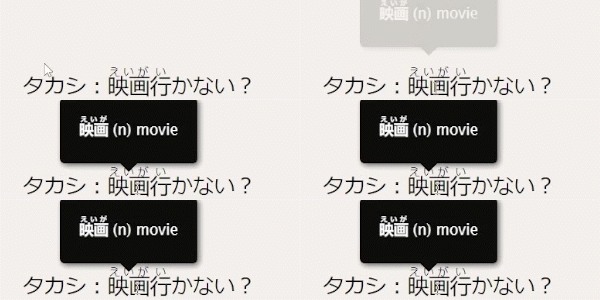
Situation 1
At school, Yuko is talking with her junior, Naoki.
Fast Version
Comprehension Quiz (Skip if you don't understand the conversation yet)
1. ナオキは次の休みに、____。
A 友達とカラオケに行く
B 家でゲームをする
C 親とご飯を食べる
D 山の中を歩く
2. ユウコは、一人でカラオケに行きますか?
A はい
B いいえ
ユウコ:ナオキ、次の休みはどっか行くの?
ナオキ:はい、親と山に…。
ユウコ:へー、楽しそう!
ナオキ:楽しくないですよ。めっちゃ歩くんですよ?
ユウコ:気持ちよさそうじゃん。山の中を歩くの。
ナオキ:家でゲームの方が、絶対楽しいです。
ユウコ:そうかな?行ってみたら、めっちゃ楽しいかもよ?
ナオキ:えー、そうですか?
ユウコ:そうそう。
ナオキ:ユウコさんも、どっか行くんですか?次の休み。
ユウコ:うん。ヒロトたちとカラオケ。
ナオキ:えー!俺もカラオケ行きたいです!
ユウコ:でも、ナオキは行けないね。山行くから。
ナオキ:いいなー。絶対楽しいじゃないですか。カラオケの方が。
ユウコ:家族で山も楽しいって。カラオケはまた今度行こう。
Situation 2
Naoki called his classmate Rika.
Fast Version
Comprehension Quiz (Skip if you don't understand the conversation yet)
1. ____に、英語のテストがある。
A 月曜日
B 火曜日
C 水曜日
D 木曜日
2. リカとナオキは、一緒に勉強しますか?
A はい
B いいえ
リカ:もしもし。
ナオキ:もしもし、リカ?今、電話いい?
リカ:いいよ。今、テレビ観てただけだし。どうしたの?
ナオキ:明日の休み、なんかする事ある?
リカ:明日は、特に何も無いよ。家でテレビ観るくらいかな。
ナオキ:ほんと?じゃあ、一緒に勉強しない?
リカ:いいけど…。ナオキ、全然勉強しないのに。どうしたの?
ナオキ:月曜日、英語のテストあるじゃん。
リカ:そっか、いいよ。一緒に勉強しよう。
ナオキ:ありがとう!分かんない問題、たくさんあって。
リカ:私に分かる事なら、教えてあげる。
ナオキ:ありがとう。
リカ:何時に、どこでする?
ナオキ:10時くらいに、カフェでどう?
リカ:うん、いいよ。じゃあ、10時にカフェね。
Step 2 - Take the Quiz
Let's see how many words you remember.
Take the quiz here.
Step 3 - Writing Exercises (Optional)
Let's practice what you learned here.
Hello,
In this sentence: リカ:私わたしに分わかる事ことなら、教おしえてあげる。
I am not fully understanding the usage of に. Would は work instead or as well? Could I get further explanation on the meaning in this context here.
Thank you 🙂
に in this case works as “to” or “from”.
The sentence means,
“If it’s something that’s clear to me, I can explain it to you.”
or
“If it’s something I can understand from my side, I’ll explain it to you.”
私は分かる事なら教えてあげる may sound odd, but it can be understood as:
“Unlike others (or regardless of others), I’ll explain what I understand.”
or
“As for me, I’ll explain what I understand (I don’t know about others).”
The particle は marks the speaker as the topic and implies contrast with others.
Does it make sense?
Thank you, I understand a lot better now. It is not often I see に used in this context but your explanation makes sense. Thank you!
You’re welcome! I’m glad to hear that.
Keep up the good work! 🙂